
What Order to Do a Home Energy Upgrade in Ireland
Insulation, roof, heat pump, then solar. Doing the steps in the right order saves money and stops you undoing work later.
Grant figures confirmed against SEAI
A Home Energy Upgrade Works Best When the Steps Happen in the Right Order
A home energy upgrade in Ireland is rarely one job. It is a sequence, insulation, roof, heat pump and solar, and the order you do them in decides how much you spend and how well the finished home performs. Get it right and each step makes the next one cheaper.
The thread running through all of it is the SEAI grant scheme, which supports insulation, heat pumps and solar as separate measures. You can claim each one as you reach it, so a staged upgrade spreads the cost without losing any grant. What you cannot easily undo is doing things out of order, like fitting solar to a roof that needs replacing, or sizing a heat pump for a house you later insulate.
Fabric first is not a slogan, it is arithmetic. Attic insulation, wall insulation and reasonable airtightness lower the amount of heat the house needs in the first place. Every step after that is sized against the lower figure, so the heat pump fitted to an insulated house is smaller, cheaper to buy and able to run at the low flow temperature where a heat pump is at its most efficient. Do it the other way round and you buy a system sized for a house that no longer exists.
The roof comes before solar for a simpler reason. Panels are mounted on the covering, so a roof due for replacement inside the panels' working life means paying to take the array off and put it back. If the roof has years left, nothing needs doing. If it does not, the roof work and the panels belong in the same conversation rather than two years apart.
What makes the sequence awkward in practice is that it is four different trades with four different registrations, all working on one house. The insulation contractor comes before the heat pump installer, the roofer before the solar installer, and each one needs the previous step finished rather than merely planned. Treating the upgrade as a schedule rather than a shopping list is most of the job.
The Right Order for a Home Energy Upgrade, and Who You Need at Each Step
Four steps, each setting up the next. Every step is a different trade and a different registration, so it helps to know who does what.
Insulate the fabric first
Insulation is step one of any home energy upgrade. A well-sealed home needs less heat, so every system fitted after it can be smaller, cheaper to buy and cheaper to run. Attic and wall insulation is also the core SEAI grant, so it pays back twice.
Start by getting quotes from SEAI-registered insulation contractors.
Sort the roof before roof-mounted solar
If the roof is near the end of its life and you are planning roof-mounted solar, deal with the roof first. Fitting panels onto a roof that needs replacing means lifting them off again a few years later, at your own cost.
The roofers explain the timing in their guide to re-roofing while the scaffold is up.
Fit the heat pump as the main heat source
With the fabric sorted, a heat pump becomes the main heat source, grant-eligible for up to €12,500 (as of July 2026). It runs at a low flow temperature, which is exactly why the insulation had to come first. Commissioning the system and fitting the hot water cylinder is a job for a registered plumber.
Line up an RGI-registered plumber, then compare heat pump installers in your county.
Add solar PV and the electrical connection
Solar panels offset the electricity a heat pump draws, which improves the running-cost case for both. The connection has to be certified and registered with the grid, which is work for a registered electrician who can also handle EV charging at the same time.
The grid connection needs a registered electrician, then compare solar panel installers near you.

Where the SEAI Grants Fit into the Upgrade
Each step carries its own SEAI support. Insulation and the heat pump grant of up to €12,500 (as of July 2026) are the biggest levers, and solar PV has its own grant on top. Because they are separate, the order is about cost and performance, not eligibility.
Many installers offer a home survey, which helps them scope the work. Confirm what your home qualifies for, and how the grant application is handled, with SEAI and your installer before any work starts.
How the SEAI grants workHome Energy Upgrade Order, Answered
What order should I do a home energy upgrade?
Insulation first, then the roof if it needs replacing before solar, then the heat pump, then solar PV. Getting the fabric right first means the heat pump can be smaller and cheaper to run.
Should I insulate before a heat pump?
Yes, wherever the budget allows. A heat pump runs at a low flow temperature, so a well-insulated, airtight home is what lets it keep you warm cheaply. Many homes upgrade attic and wall insulation first or alongside the heat pump.
Do I need to re-roof before solar panels?
Only if the roof is near the end of its life. Solar panels last around 25 years, so fitting them onto a roof that needs replacing soon means paying to remove and refit them later. If the roof is sound, solar can go straight on.
Does the order affect the SEAI grants?
The grants for insulation, heat pumps and solar are separate, so you can claim each as you go. The order matters for cost and performance rather than eligibility, because good insulation makes the heat pump grant go further.
Can I do it all at once?
You can, and a one-stop-shop route under SEAI bundles measures together. Doing it in stages spreads the cost and still works, as long as you keep the order in mind so earlier work does not have to be undone.
Who do I need for each step?
An insulation contractor for the fabric, a roofer if the roof needs work, an SEAI-registered heat pump installer plus a plumber to commission it, and an electrician for the solar and grid connection. Each is a different registration.
Can I fit a heat pump without insulating first?
Yes, insulation is not a hard requirement and a lower BER does not rule a heat pump out. The reason to insulate first is sizing: a better-insulated house needs less heat, so the system fitted to it is smaller and cheaper both to buy and to run.
What happens if I fit solar before fixing the roof?
The panels have to come off again when the roof is done, which means paying twice for the same mounting work. Any roof repair or replacement belongs before anything is mounted on it.
Which step attracts the biggest SEAI grant?
The heat pump, on SEAI's published amounts. SEAI lists €6,500 for the heat pump itself, against up to €1,800 for a domestic solar PV system, and total support for a house can reach up to €12,500 once other qualifying measures are included (as of July 2026). Check the current amounts with SEAI before you commit.
More on Heat Pumps and SEAI Grants
 SEAI heat pump grant explained How the grant of up to €12,500 (as of July 2026) works and how to apply. Read guide
 Is my home suitable for a heat pump? Insulation, BER and radiators that decide suitability. Read guide
 Heat pump cost in Ireland What each system costs, before and after grants. Read guide
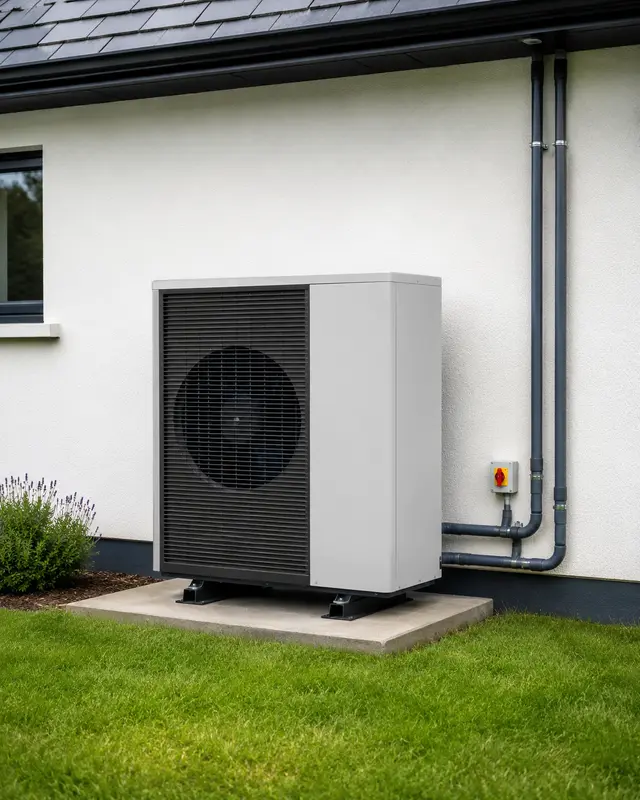 Heat pump installers in Ireland SEAI-registered, grant-eligible installers in all 26 counties. Read guide
Home Energy Upgrade Order, Step by Step
The four steps in the order they pay off, what each one involves and which trade you need for it.
| Step | What it covers | Who you need |
|---|---|---|
| 1. Insulate the fabric | Attic and wall insulation and airtightness, which lower the heat the house needs before anything is sized | An insulation contractor |
| 2. Sort the roof | Any roof repair or replacement, done before panels are mounted on it | A roofer |
| 3. Fit the heat pump | The main heat source, sized to the house as it is after the fabric work | An SEAI-registered heat pump installer |
| 4. Add solar PV | Panels and the grid connection, once the roof is sound and the load is known | An SEAI-registered solar installer and a registered electrician |
The order is what saves money. Sizing a heat pump before the insulation is done means paying for a system bigger than the finished house needs, and then paying again for the insulation that makes it oversized.
Ready to Start Your Home Energy Upgrade?
Whatever step you are on, a home energy upgrade starts with an SEAI-registered installer. Find one in your county and get the survey that turns the plan into a quote.
The order matters more than the shopping list. Fabric work first, because insulating and sealing the house lowers the heat it needs and lets a smaller, cheaper system serve it. Get that sequence wrong and you pay twice, once for a system sized to an uninsulated house and again for the insulation that then makes it oversized. An installer surveying the house will tell you which step you are actually on.